

How to talk about them
Gender-diverse people* use different methods of expressing their gender in their own cultural and linguistic contexts. Some languages, such as English, have a ready-made alternative, e.g. ‘they’, while many other languages, such as French, have had to create new ‘non-standard’ forms, e.g. ‘iel’ (instead of ‘il’ or ‘elle’), while others still have repurposed existing forms in their language, e.g. ‘ono’ (a third-person singular pronoun used for objects and children) in Polish. Other languages have yet to figure out how best to talk to and about gender-diverse people.
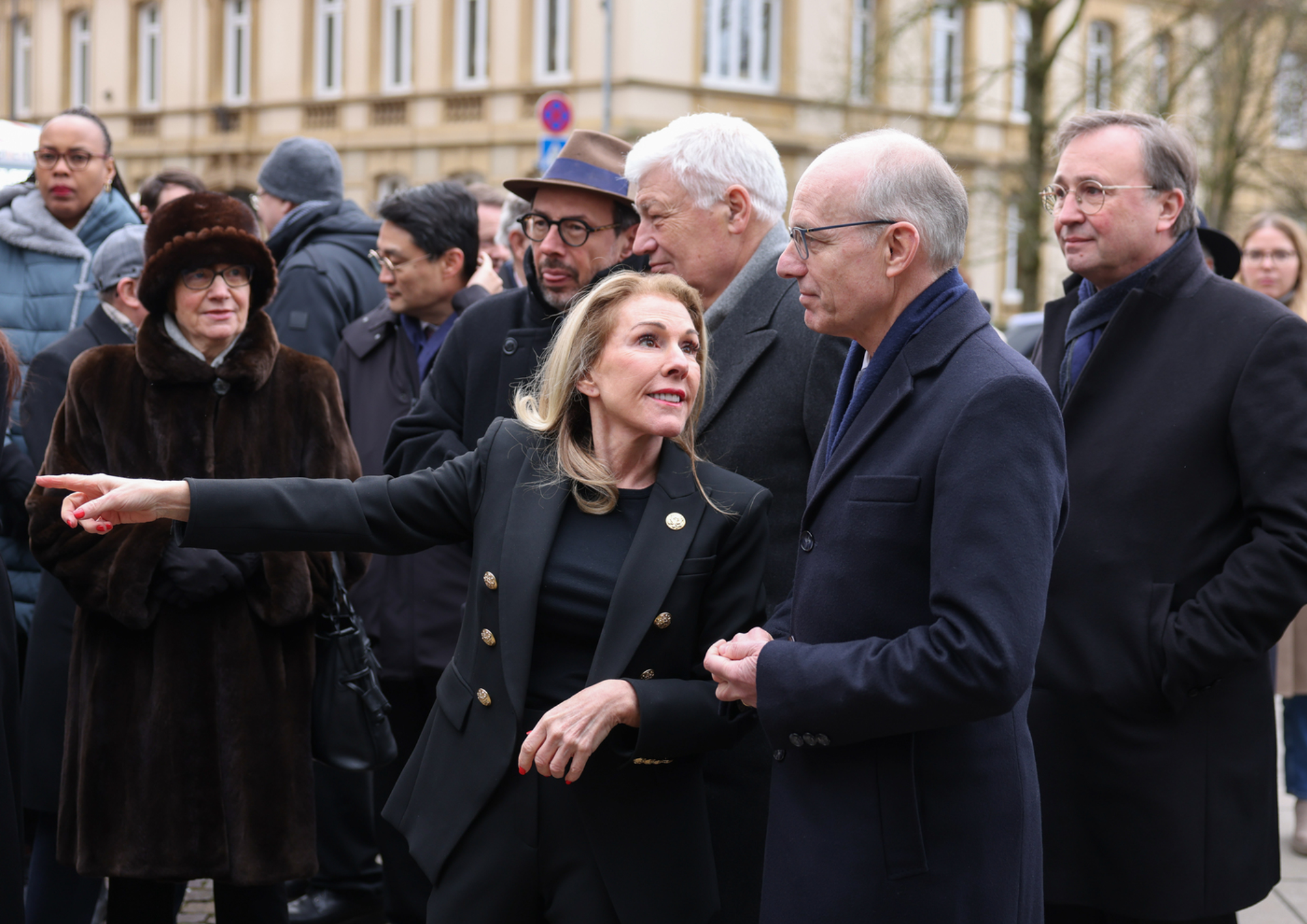
Trump-sympathiser and US Ambassador to Luxembourg welcomed at ISL
This article critiques the International School of Luxembourg (ISL) for inviting US Ambassador Stacey Feinberg to a Global Issues Network conference, arguing it exposes the school’s selective neutrality. While ISL condemned Russia’s Ukraine invasion, it stayed silent on Gaza and Iran. Students pushed back through poster campaigns and Amnesty International activism. This shows that it is a must to educate the youth to challenge injustice which is essential for building engaged future citizens.