
This text will talk about food. Initially, I decided to write it to share a recipe that I learned from my mother. However, that recipe holds a deeper meaning beyond its nutritional value – which is why I’ve decided to also talk about what it represents to me and how it impacted my life in Luxembourg.
I understand that this whole premise may feel a bit… odd. But yes, you can make an Afro-Brazilian dish with ingredients bought in Luxembourg. There’s no need to import products; they are all here. However, you won’t find it (or its ingredients) in any Brazilian restaurant or supermarket in the country – you need to know where to look.
To give you some context, a lot of people know at least something about Brazil: Rio de Janeiro, São Paulo, beaches, sun, caipirinha. But that is not the Brazil I came from. But I also come from a very-well known place, the Amazon Rainforest. I’m an Indigenous person from the Kambeba People (you can learn about us here), my family and I are descendents from a region called Fonte Boa, in the Solimões River. I was adopted and grew up in the capital of the Amazonas State, Manaus, where I lived for all my life. Manaus is the city with the most Indigenous peoples in Brazil (you can read about it here). After several life twists, now, at 33, I somehow find myself in Luxembourg.

Solimões River – Image Source: Flickr via Coordenação-Geral de Observação da Terra/INPE
Let’s take a shortcut and move a bit forward here – I promise this won’t turn into an autobiography. In Luxembourg, I made some Brazilian friends, joined some “find new friends” groups but – and I’m sorry but there’s no way to sugarcoat it – everyone I met was white. The Brazilians were from totally different backgrounds, different life experiences and knew next to nothing about all the things that mattered the most to me in life: fighting the capitalistic subjectivity that alienates us and indigeneity from a decolonial perspective. Ouch. Is that too much to ask of people? I do wonder.
However, it was the first time in my life that I found myself surrounded with only white cishet people. Back home, all my Brazilian friends were either Indigenous, black, lesbians, trans people or radically politically engaged people, and they were always a great crowd to be around.
Before coming to Luxembourg, I spent 18 months living in Belgium, where I did my PhD internship, and was lucky enough to meet, on the very first day, another Indigenous person – a great friend who never let me feel alone for a single day. I loved living there, loved the university, the research group, and the political engagement. Then my family and I came to Luxembourg and – boom – all alone. Almost two years have passed and I still feel so, so, so alone. I wrote about my experiences here.
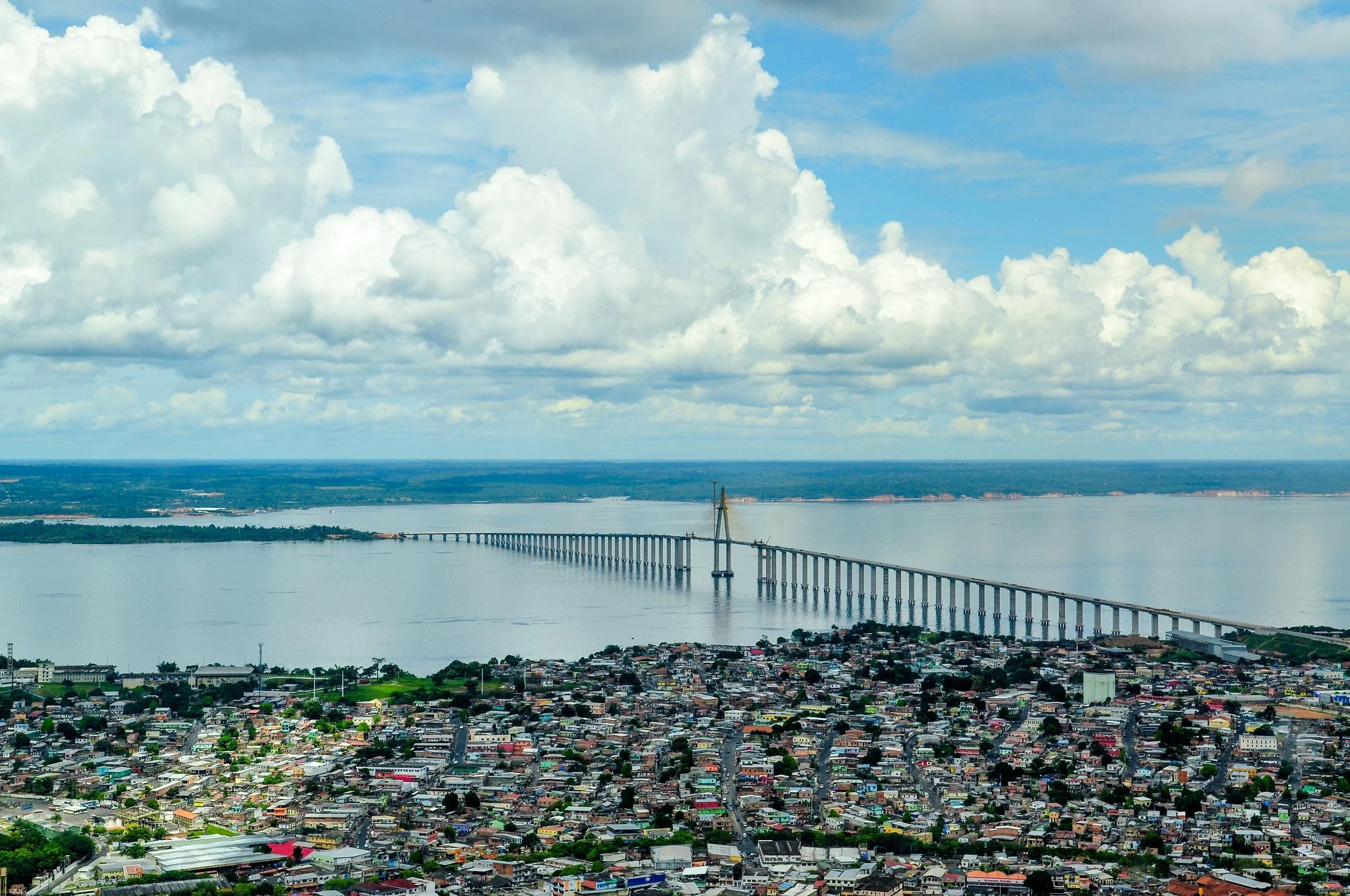
Manaus, Brazil – Image Source: Flickr via Landscape Alliance / Neil Palmer / CIAT
Since this text is about finding comfort, let’s get to it.
One of my most important references in Indigenous activism is the artist Denilson Baniwa, from the Baniwa people – his work has helped me a lot in navigating life outside the Rainforest. (Please, read about him here). In a conversation that Denilson had with another great Indigenous artist (you can listen to it here), Jaider Esbell, they talked about: “being Indigenous is creating something collective”. It is not about one single person. It is about crowds of communities. About creating something together. That is what being Indigenous is all about.
I spent 5 whole years researching and writing about Indigenous identity for my PhD (and activism) so, please, bear with me and allow me to say a few words about it. Don’t worry, this won’t turn into a 300-page thesis – that one is already done and published!
Indigenous identity is a very broad perspective and it plays different roles in distinct society spheres, I will try to break it down a bit from the Brazilian point of view:
After the military dictatorship, in 1988, the Brazilian government first recognized the Indigenous populations as, well, people. This is still written in our present-day constitution – we are people that have rights, especially land and cultural rights. Back then, we had fewer than 900,000 people officially registered as “Indigenous” in Brazil. First, because the dictatorship annihilated tons and tons of us. Second, because the government didn't yet have the appropriate research tools to understand and reach most populations. Several Indigenous collectives fought hard to have those lines included in the constitution. That victory came from political engagement, strategy and kinship.
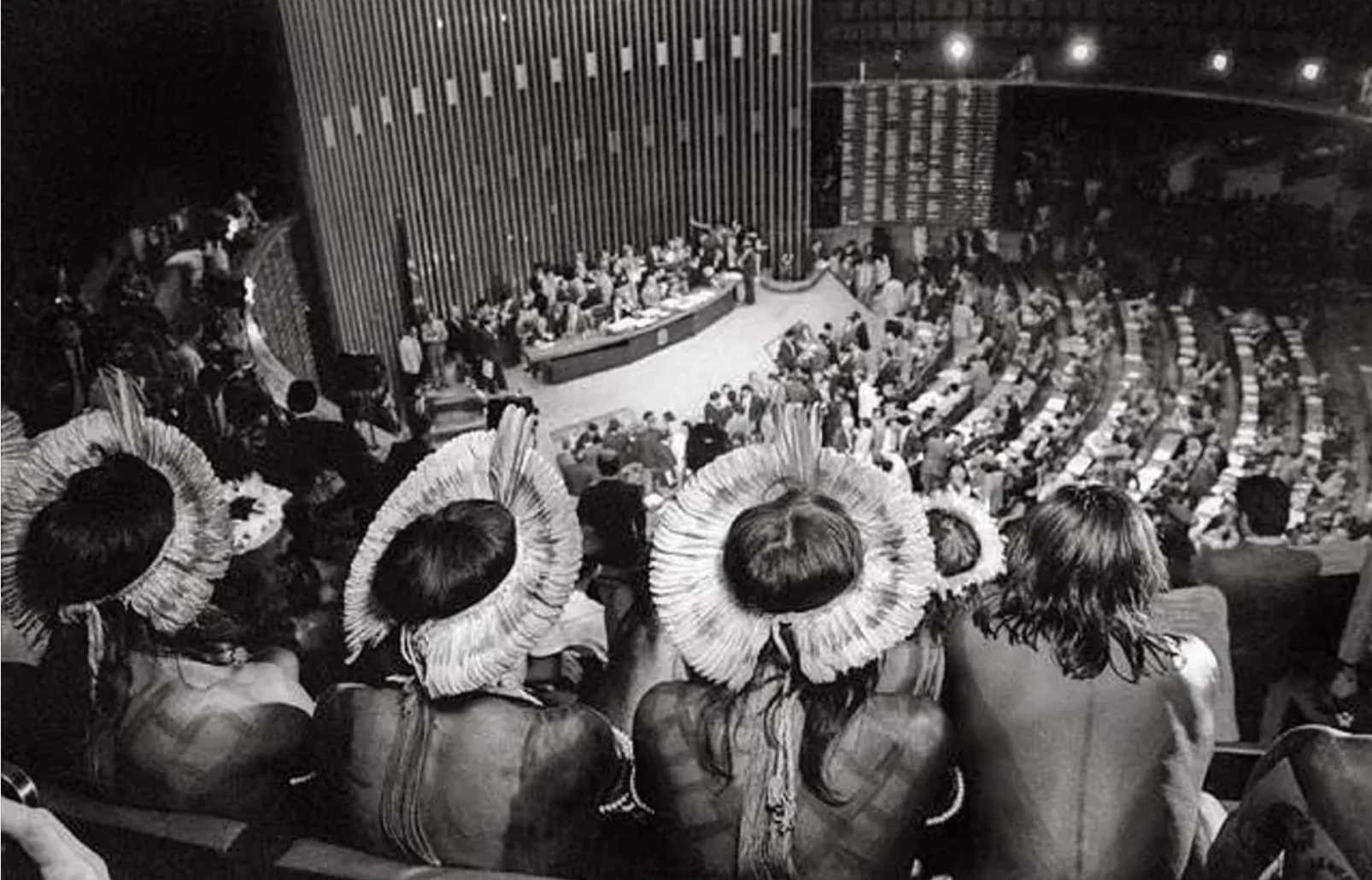
Vote on the chapter on indigenous rights in the plenary of the Constitutional Assembly at the National Congress
Jumping forward a few decades, in 2010, there was still no significant increase in Indigenous populations – it was still stuck at less than 900,000. It’s enraging – but also revealing. There are many explanations. It mostly comes from the colonial idea of “modernity” that penetrates bodies and minds. Being “Indigenous” is seen as being “late” in life. We are encouraged to surf the wave of modernity, to abandon ourselves. Being Indigenous is almost an insult. For example, we would have schools with Eurocentric curricula in the middle of the Amazon Rainforest (yes). We would have next to zero representation of our culture in any social, cultural, economic or political space. There is a domination of a Global North subjectivity in our consumption, social relations and – most importantly – in the way we connect with the land. The land is there for us to consume, to exploit, to destroy – not to be a very part of ourselves and a vital component of our souls.
But not all is lost. The decade 2010-2020 was full of hard work. In 2023, the number of self-declared Indigenous people in Brazil rose to over 1.6 million people (read about it here). That’s more than double. It was all activism and grassroots work, from people to people. Seminars, protests, our presence in universities, in politics, in books, in TV shows, on the internet. It came from educational spaces, teaching people about our history, how it all came to be, understanding the colonial facade that prevented many from self-identifying and declaring themselves Indigenous.
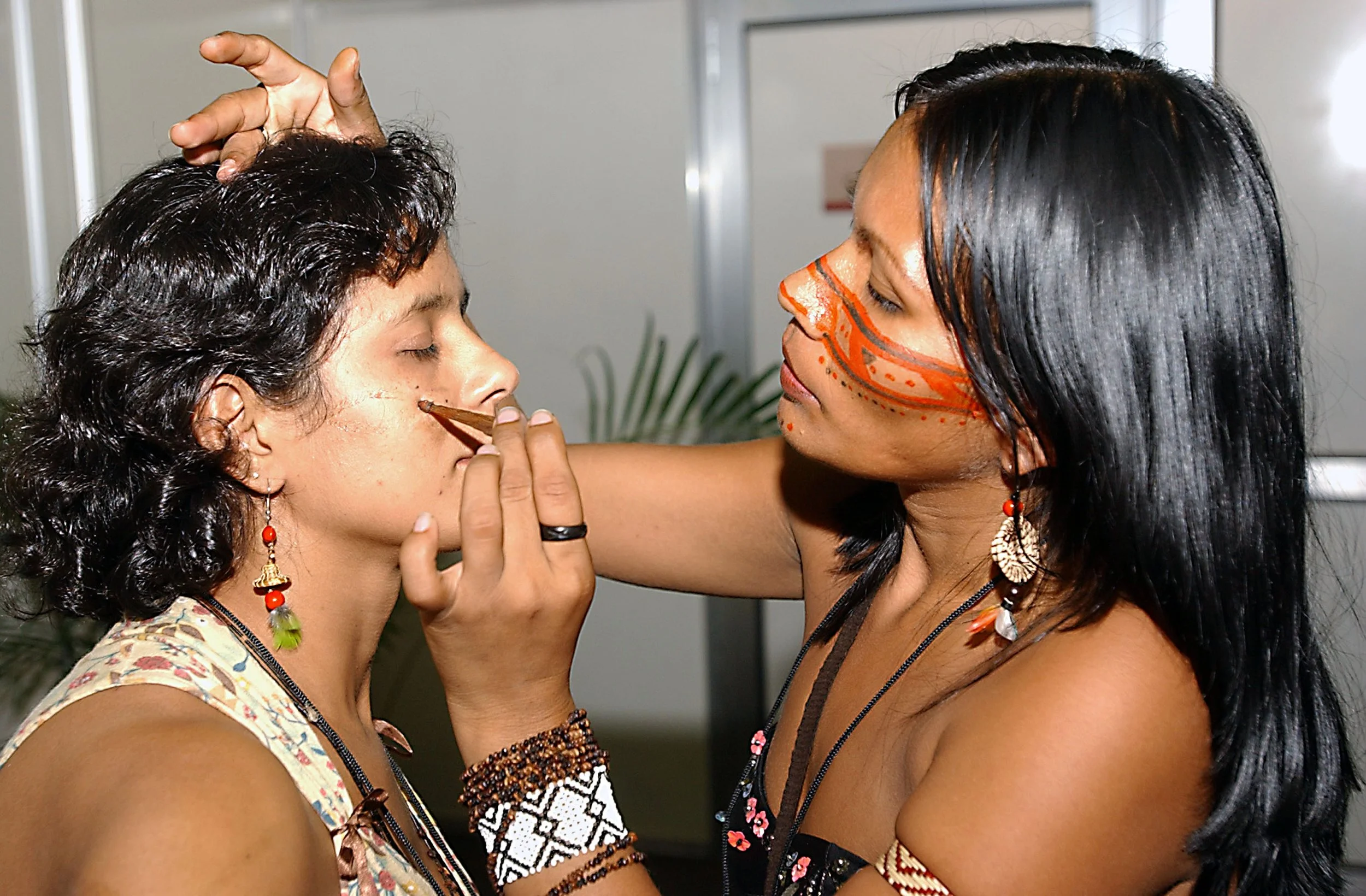
1st National Conference for indigenous people in Brazil (2006) – Image Source: Valter Campanato/ABr
This is all related to the recipe I am about to share. How? Well, mentioning again the Indigenous artist Jaider Esbell: “colonization did not win”. Colonization was a failed project. If the Portuguese colonization in Brazil erased all the Indigenous people, as they claimed to have done so, how are we still here? Colonialism did destroy most of our land and people, yes. But not everybody and not everything. Resistance always existed. And in 422 years of Portuguese colonization, there wasn’t a single day where Indigenous people didn’t fight. Our ancestors were successful – otherwise I would not be here today writing this recipe. Or the number of Indigenous in Brazil wouldn’t just have doubled a few years ago. We are reclaiming what is ours. The recognition of our identity is just the beginning.
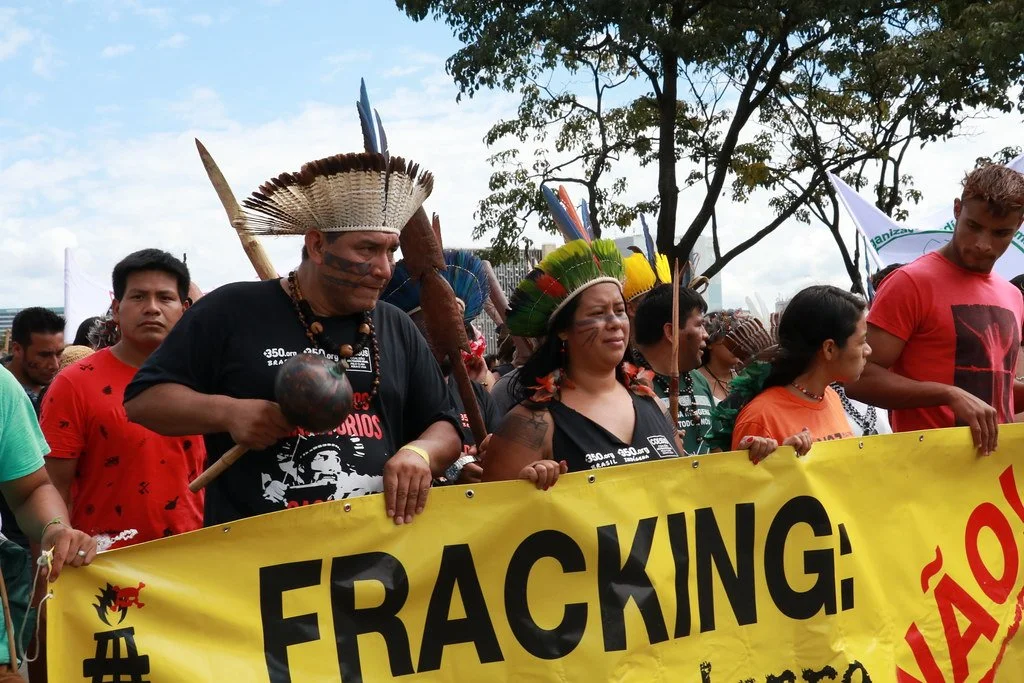
Brazilian national indigenous mobilization (2018)
My mom is an Indigenous woman and she always loved to cook, as it was her profession for many years. She came from a generation where being Indigenous meant only bad things and you wouldn't find a job or any means of living if you said you were Indigenous. But something always survives. Something that we carry within our bodies. The blood that flows in our veins is full with the same blood that expelled the Portuguese from our territory. It doesn’t necessarily carry the same DNA, but it carries the same willpower, the same strength, the same flaming refusal to be erased. It also carries our shared culture, culinary, ways of creating new collective forms of existence and dissident ways of living.
I mentioned before that I believed that being Indigenous was creating something collectively. The recipe I will (finally) share with you today was born from the anticolonial alliances between Indigenous and African peoples during the transatlantic slave trade (you know, back when Europeans trafficked us). It is called Vatapá.
The word “Vatapá” comes from the Yoruba word “Ehba-tápa”, and it’s a fusion of ingredients originally from the African continent and some ingredients from the Brazilian territory. This dish nowadays is mostly consumed in the Amazon/North and Northeastern regions – where most of the population is either Indigenous or black. I will be talking about the Vatapá that comes from the Amazon region – the one that my mom makes, and her mother made before her. And the one that I decided to cook for the first time when I was living in Luxembourg.
Being here can, in fact, bring a lot of ethnic alienation and racial suffering. I do feel alone. I am tired of looking around and not having people to share cultural ties with. I do appreciate the Brazilian people I met so far, but we are so culturally distant. It wasn’t until a student from Cape Verde brought a few fried plantains to the place I worked that I realized that I would never stop being Indigenous, but I needed to create something with the products available to me. By the way, fried plantains were THE food from my childhood and I never knew it was also a typical dish in Cape Verde (and also other countries in Africa). I was very happy. So I went to an African store to look for some plantains to fry at home and I found the most important ingredient to make Vatapá: azeite de dendê, or palm oil. Most Brazilians don’t know this, you will probably not find it in a Brazilian store. Buying the palm oil fueled me with the will to look for some alliances, for political collectives, something that reminds me of why I am here on Earth, what is important to me: creating something collective.
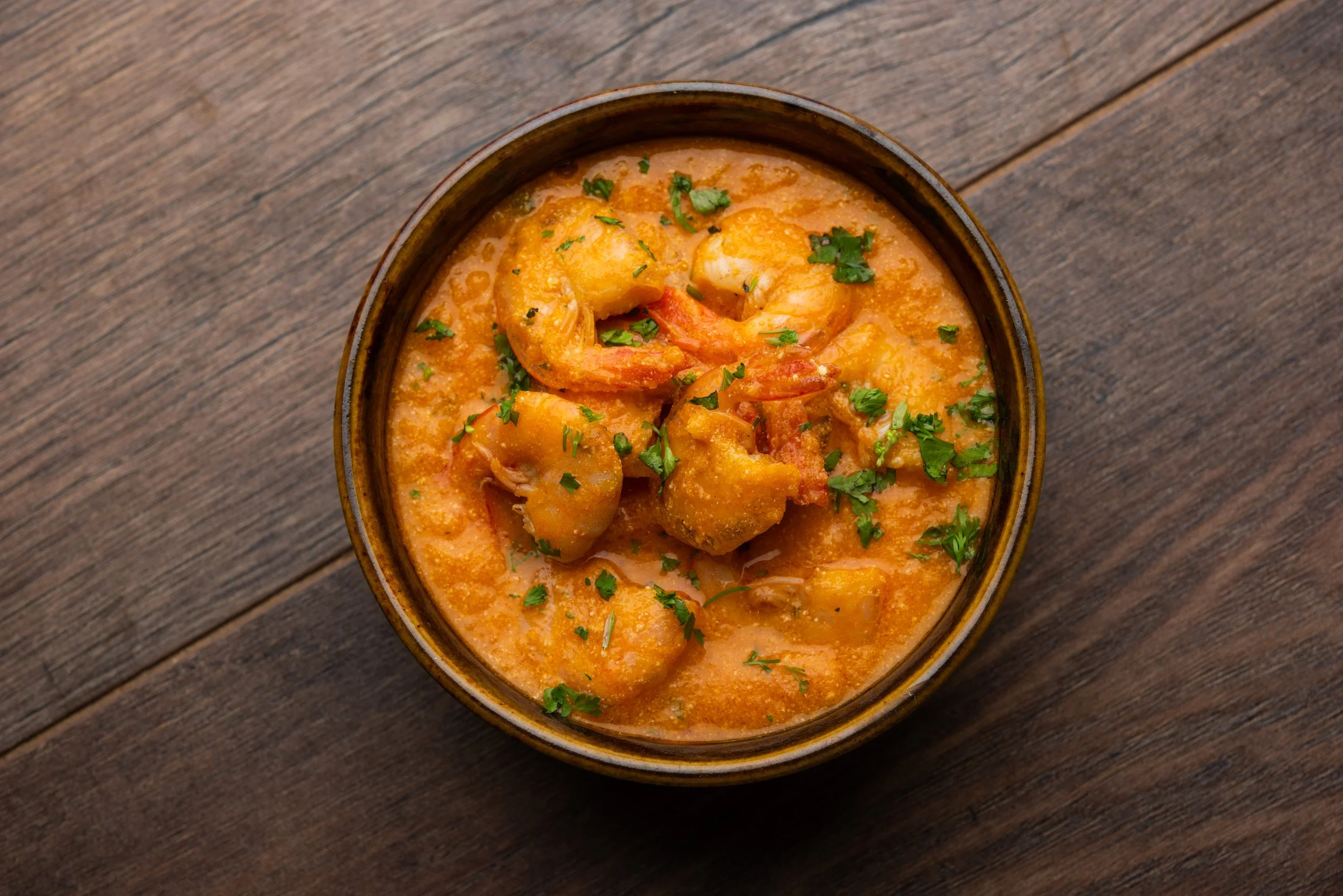
Vatapá
I ended up cooking Vatapá at my apartment in Luxembourg. I sent photos and videos to my family and they were all satisfied with my results. I invited some friends to try it and served it with some fried plantains and jollof rice. Vatapá with fried plantains and jollof rice. This is a dish born from anticolonial alliances. It exists to remind us that not everything is lost. There is still hope, there are still connections to be made, there are still misfit friends to meet and friendships to create. There is still room for collectivity.
And if you feel like trying some Vatapá, I can’t share my mom’s recipe (she would be very mad) but I will share this other one, which is also great – from Piquant Post, here.
Let us be reminded that there is still a lot to be done.