
With an eye on Windsor: monarchy in modern Luxembourg
After a period of respite for Andrew Mountbatten Windsor, previously Prince Andrew, last autumn’s posthumous publishing of Virginia Giuffre’s memoir, Nobody’s Girl: A Memoir of Surviving Abuse and Fighting for Justice, plunged him once again into the snapping jaws of public scrutiny. Faced by mounting pressure, King Charles was left with little choice but to strip his younger brother of his titles and demand that he vacate his residence at Windsor’s Royal Lodge.
The Windsors – after years of half-heartedly mollifying the fallout from their biggest scandal of this century – have finally provided an answer to what they will do with their most wayward son, momentarily putting themselves ahead of the story.
But it took less than a week for Andrew to resurface in their lives, seen with his summoning to the US Congress for questioning over his relationship with Jeffrey Epstein.
Whether he appears at Capitol Hill or not, as a private citizen without the protection of the monarchy, it would be naïve to suggest that this will be the end of the unwanted exposure he brings to his now-estranged family. Late December’s cache of publicised Epstein emails, including Andrew’s request to Ghislaine Maxwell for “inappropriate friends,” as well as January’s compromising photographs and further correspondence, constituting just the tip of the fatberg.
Valid questions have seeped into the British public’s conscience. How much does the king know? Where did that reported £12 million (€13.6 million) out-of-court settlement to Giuffre come from? What other bills of the former Duke of York have they been footing? Why – in a country reeling from both housing and cost-of-living crises – was the then-prince put up in a fully staffed mansion on a peppercorn rent?
The problem for the British royal family is that these questions, although specific to Andrew, form a gateway for demands to examine the often-opaque arrangements and financing they benefit from elsewhere. When many of their “subjects” are living month to month, they must know that their compatibility in 21st century Britain is emerging as one of the biggest questions.
The Grand Court Ducal of Luxembourg
Closer to home, the Windsors’ distant cousins, Luxembourg’s Grand Court Ducal, have never been burdened with a scandal to a similar magnitude or experienced the accompanying public probing. Although with differences, many of the characteristics and dynamics of both constitutional monarchies are similar. For instance, the provision and use of public money.
As the risk of poverty now affects almost 1 in 5 people, coupled with a persistent housing shortage – over which the government’s inaction has been criticised by the EU Commission – Luxembourg’s population is facing its own standard-of-living crisis.
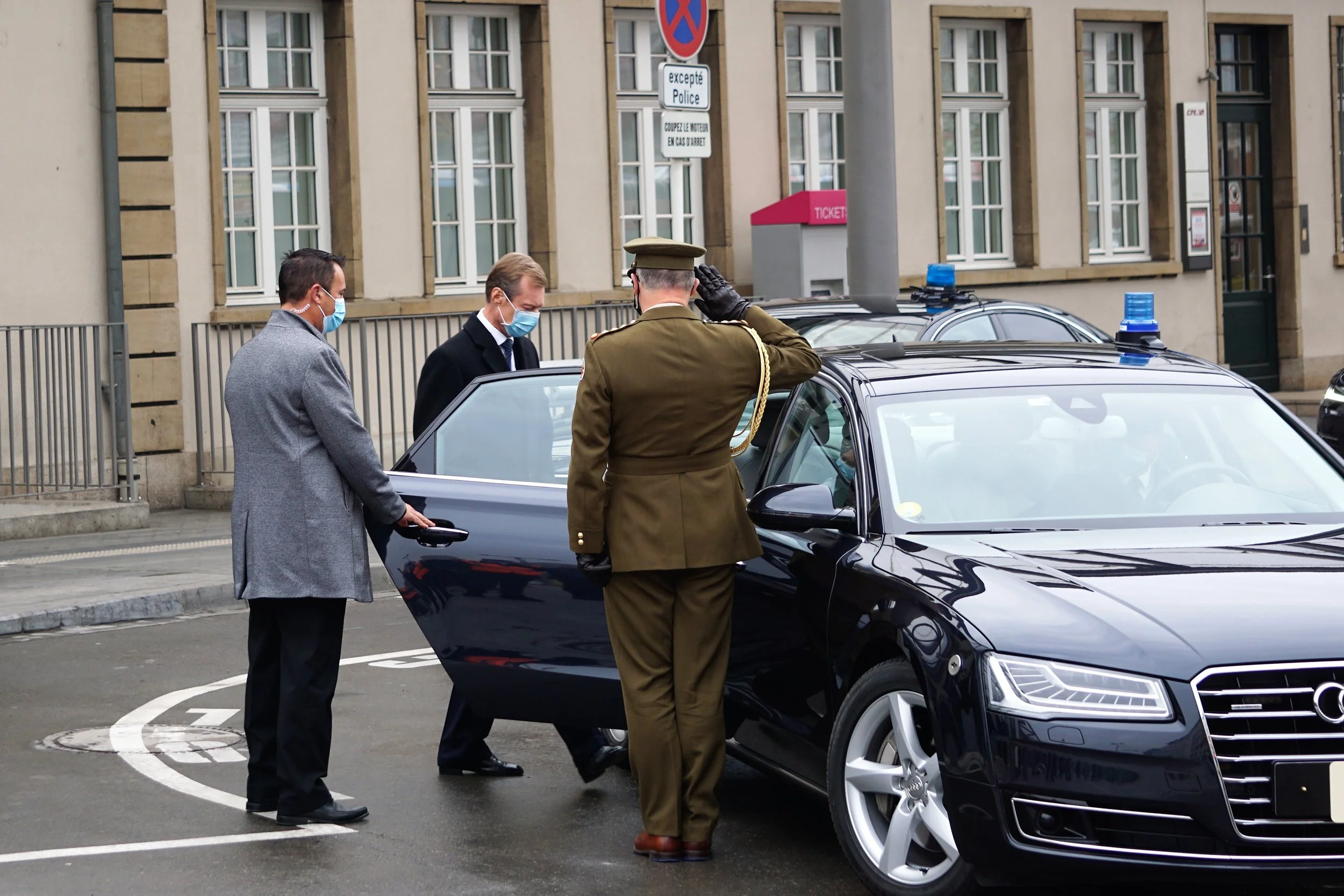
At the same time, last year’s tax-funded budget for the upkeep of three of the monarchy’s residences stood at €3.6 million.
The Court’s purse
In reality, €3.6 million is just a fraction of the €22 million in public funds annually allocated to the monarchy.
In 2024, total royal expenditure reached €19.3 million, €800,000 more than 2023 – with this expected to have increased by €310,000 in 2025. All in addition to at least €8.6 million in taxpayers’ money spent on last October’s two-day coronation celebrations, and a combined annual salary of €814,000 for Henri and Guillaume, which, with the latter taking the throne, has risen a further 3%.
All in all, not a bad take for a family reported to have a net worth of nearly €4 billion in assets.
Out of the €19.3 million spent in 2024, €13.6 million (a €1 million increase on 2023) was made up of “personal costs,” with the remaining amount providing travel, security, and the aforementioned upkeep of the Palais Grand Ducal and their castles in Fischbach and Berg.
Even with the information available, there are gaps in the data, leading to questions on where money is exactly going and calls for more transparency and royal accountability.
The family has passingly contested their estimated net worth and its sources, facing minimal pushback. Certain decisions, such as presenting their published budgets across multiple lines rather than amalgamated under a single heading, have also drawn criticism – and only added to translucency.
How this compares to public spending elsewhere
Key initiatives in the government’s budget have been promised to help alleviate the pressures felt by over 18% of the population currently at risk of poverty.
However, if we take housing as one example, the difference between spending on the royals and those below a comfortable standard of living is staggering.
The government has committed €2 billion between 2025 and 2028 to affordable housing, adding a further €120 million to its special housing fund, specifically designed to help citizens struggling to find or keep a place to call “home.”
With the cost of living continuing to rise, so too will the number of people at risk of poverty – the demographic most eligible to benefit from the affordable housing initiative and its fund. Going by current trends, this could apply to 20% or more of the population over the upcoming years. If this is the case, the government’s promised future investment will be available for close to 136,000 people.
Although these commitments demonstrate vital responses to an ever-deepening crisis of affordable accommodation, when the numbers are broken down, the distribution of €2 billion at an individual level is negligible to the housing benefits received by the country’s richest family.
In 2024, out of the €4.6 million put aside for royal refurbishments across two of their residences, the family spent €424,000 of taxpayers’ money.
If the new housing budget were distributed equitably over 20% of the population, this single royal bill is over 28 times the amount the government could spend on each eligible citizen for the next 3 years.
Of course, due to differing needs and the unlikelihood all qualifying residents will access available help, housing support provided will vary from case to case. And, in light of Luxembourg’s European neighbours, governmental assistance and investment offered is comparably generous.
Unfortunately, this comparative generosity is curtailed by a lack of accessibility to both information and application processes, which regularly hinders those on the socioeconomic margins from receiving the full extent of aid they are entitled.
Even when all eligible provisions are totalled, financial support for each citizen still pales in significance to those of the royals, both Luxembourg’s wealthiest family and biggest individual recipients of social aid.
The Court and modern Luxembourg
The disparities are even starker when we remember that the monarchs are spared the same everyday pressures of residents in need of support.
There is no comparative daily commute to and from work, juggling weekly expenses for food, cooking, household chores, childcare, rent concerns, or the anxiety of a precarious job market. Neither is there a need to try and find the time to seek assistance, the fear of making mistakes on paperwork, facing application rejections, or wondering when finances will arrive.
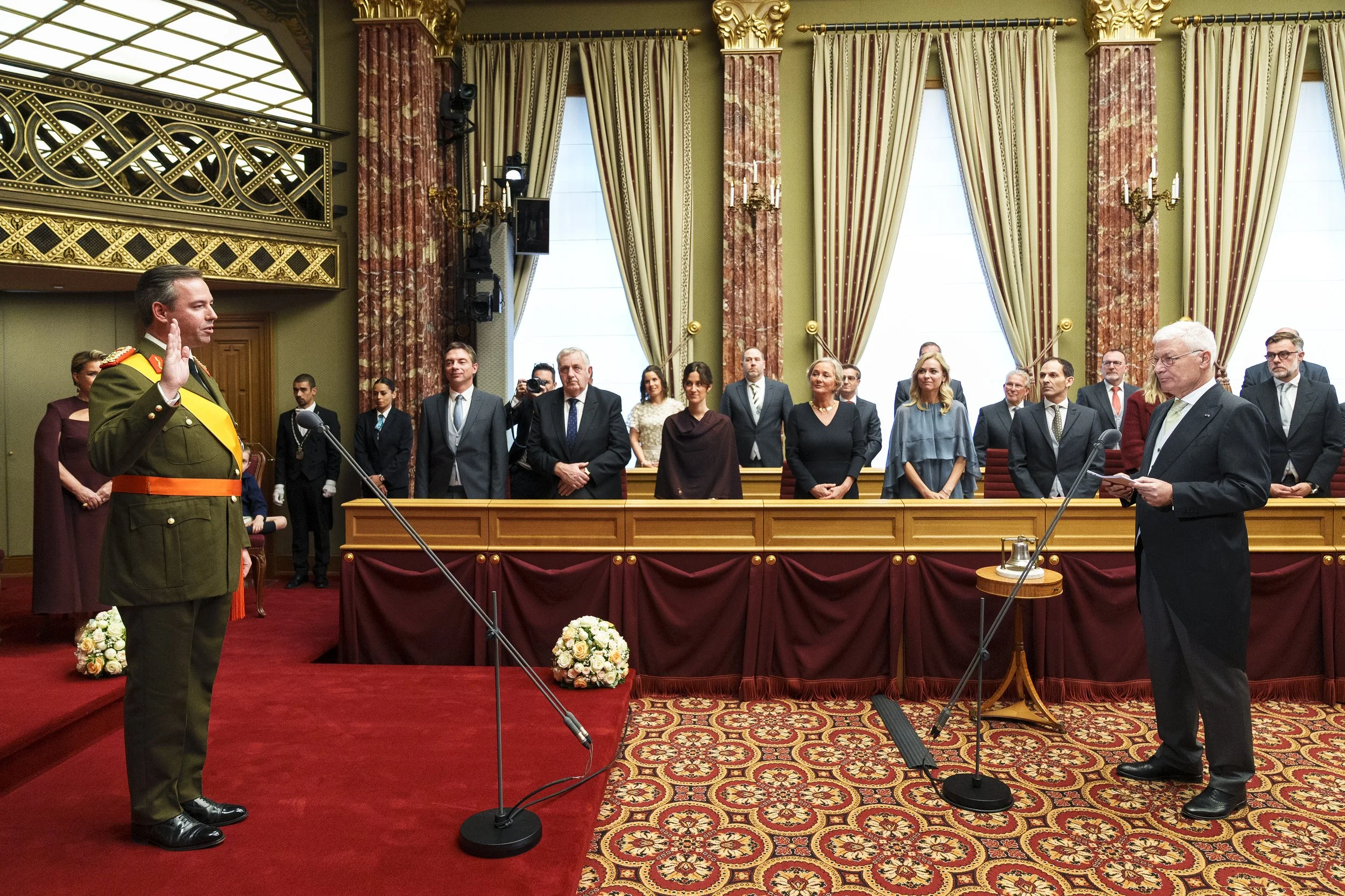
Instead – while Duc Guillame enters the top 1,000 richest people in the world, an amount equivalent to almost half of his family’s reported net worth is spent towards the housing of nearly a fifth of the population, and royal annual expenditures are only forecast to increase – members of the Grand Ducal Court are granted immediate financial support by the lottery of birth or (depending on your interpretation) “divine right.”
Looking to Windsor
European republicans and monarchists alike will be keeping a close eye on the UK and how the banishing of Andrew plays out, speculating what could be in store for their own royal families.
With the US Congress summoning likely just the beginning of a long and winding litigious road for the former prince, the court of public opinion should be the least of his judicial worries.
For the rest of his family – with more revelations almost certainly on the horizon – the coming months and years will produce uncomfortable questions about the British monarchy’s wealth, suitability, and even its existence in the contemporary world.
Whether similar questions on the finances and privileges of the Grand Court Ducal will be asked any time soon is unlikely. Approval of the monarchy among Luxembourg residents sits comfortably at nearly 70%.
However, as more people start to feel economic constraints and the number of applicants for financial aid steadily increases, extreme wealth inequalities, along with the siphoning of public money that sustains them, will become harder to ignore – no matter how entrenched in national identity these might be.